Most Reverend Broderick S. Pabillo
Apostolic Vicar of Taytay Palawan and
Mission Partner of St. James COPA Foundation
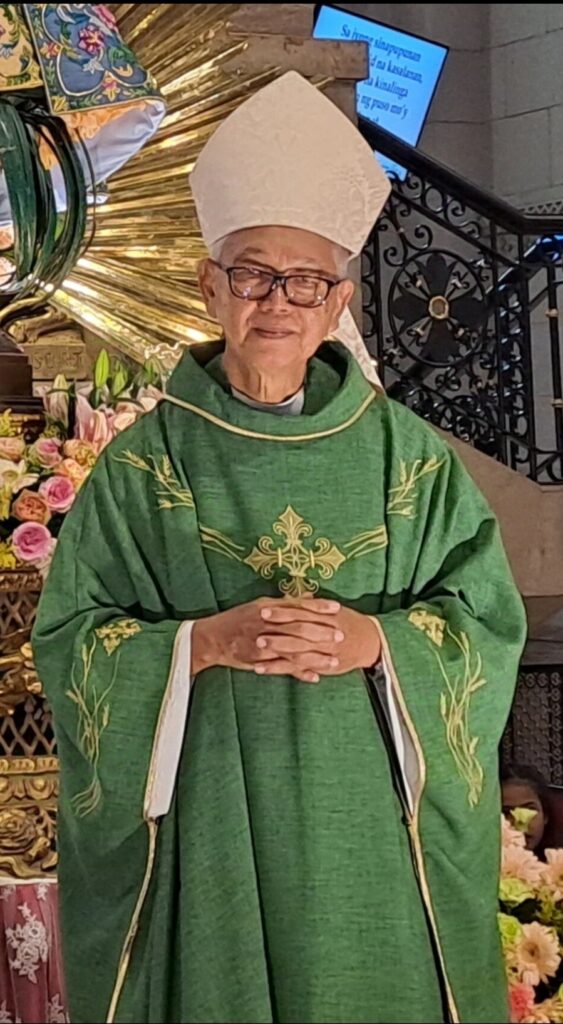
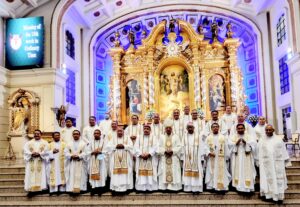
When Bishop Broderick Pabillo was designated Vicar of the Apostolic Vicariate of Taytay Palawan in 2021, not a few people were surprised. He had, after all, been Auxiliary Bishop of the Archdiocese of Manila in the preceding fifteen years. But the fact is that Pope Francis couldn’t have picked a better person to pursue the overarching goal of his papacy – to reach out to and walk with the people in the peripheries of society.
Bishop Pabillo started his priestly vocation as a Salesian priest and during his stint as Rector of the Don Bosco Seminary in Paranaque, he would visit the informal settlers living in the vicinity of the seminary. It was during this time that he felt drawn to a parallel calling to minister to the poor. He got his wish when he was assigned to the St. Ezekiel Moreno Parish in Puerto Princesa, a mission territory. Speaking before a gathering of COPA benefactors last July, the bishop recalled the challenges of those years between 1999 and 2006 such as the lack of sacred vessels needed to celebrate the Mass, and the long boat rides to the islands under his watch. It was during that time that he first got acquainted with COPA, which even then was a supporter of such parishes.
Come 2021, the Bishop hit the ground running with his new assignment, the northern half of Palawan covering the vicariate of Taytay. The population is roughly 500,000 of which 400,000 are Catholics. They are mostly farmers and fishermen; the professionals would be mostly teachers. When asked about their level of understanding of the faith, the Bishop said it is not very deep. We can therefore understand why a lot of his programs have focused on basic Christian education and the training and development of lay leaders. They have 700 catechists!
The vicariate is organized into 22 regular parishes, and 10 mission stations, with a total of 42 priests. But since the people are widely dispersed in clusters, there are chapels, now numbering over 100, anchored by lay leaders who lead the families living around them in religious services.
The Bishop’s program for his flock can be summed up into what he calls the three K’s.
- K-atesismo – catechism for both the young and adults
- Kriska – for Kristianong Kapitbahayan. This is a grouping of 10 to 15 families attached to a chapel who pray together, learn together and help one another in their day to day lives.
- Katiwala or Stewardship. The families are oriented towards the concept of stewardship which essentially means:
-accepting that we are not owners but stewards or katiwala of what we have,
-being grateful for having been given such resources,
-trusting in God who has provided us with such, and finally,
– pagbabahagi or balik-handog, giving back to the owner what he has given us in terms of time, talent and wealth.
These, in essence, constitute the core of their evangelization efforts, which have been met with a very positive response. The people are eager to embrace the church’s message and to cooperate in community-building efforts. For instance, the chapels that are spread all over the vicariate are the result of their bayanihan efforts, simple light structures whose materials were donated by the people themselves and built them with their own hands.
Still, the fiscal challenges remain. The incomes of each parish or mission station vary greatly such that the Bishop has to pool all their income and redistribute equally among the priests to give each one enough to live on and maintain his physical church and convent, while leaving some money to fund vicariate programs. Eight of his parishes receive financial assistance from COPA, which is being used to augment their budget for their youth and lay formation efforts. The Bishop has also received COPA funds for religious education scholarships of Taytay natives in Holy Trinity University in Puerto Princesa, with the condition that these scholars will come back to the vicariate to teach religion to their catechists for a period of two years.
Despite the challenges, the Bishop is working for the vicariate to become a full-fledged diocese, built on three pillars: stable finances, personnel, and physical structures. The one big project he is working on now is a cathedral, as all dioceses are required to have one. When that is realized it will be a source of pride and inspiration for the people of Taytay.